Port of Pemba and the Logistics Base, How Gas, Graphite and Aid Move Through the Harbour of Cabo Delgado
Pemba Bay is one of the great natural harbours of the Indian Ocean coast: a deep, sheltered bay several kilometres across, opening to the sea through a relatively narrow mouth. The Portuguese built a town on its southern shore in the early 20th century for exactly that reason. A century on, the bay is the main reason Pemba matters to the gas industry, and the port is where Cabo Delgado's boom either works or jams.
The commercial port
The Port of Pemba is a small general-cargo port run by the state ports and railways company, CFM. It handles fuel, timber, cement clinker, food and the containers that keep the province supplied. Its capacity was raised from about 250,000 to 400,000 tonnes a year, and in 2025 a logistics company, Grindrod, opened a 10,000-tonne transit warehouse inside the port area.
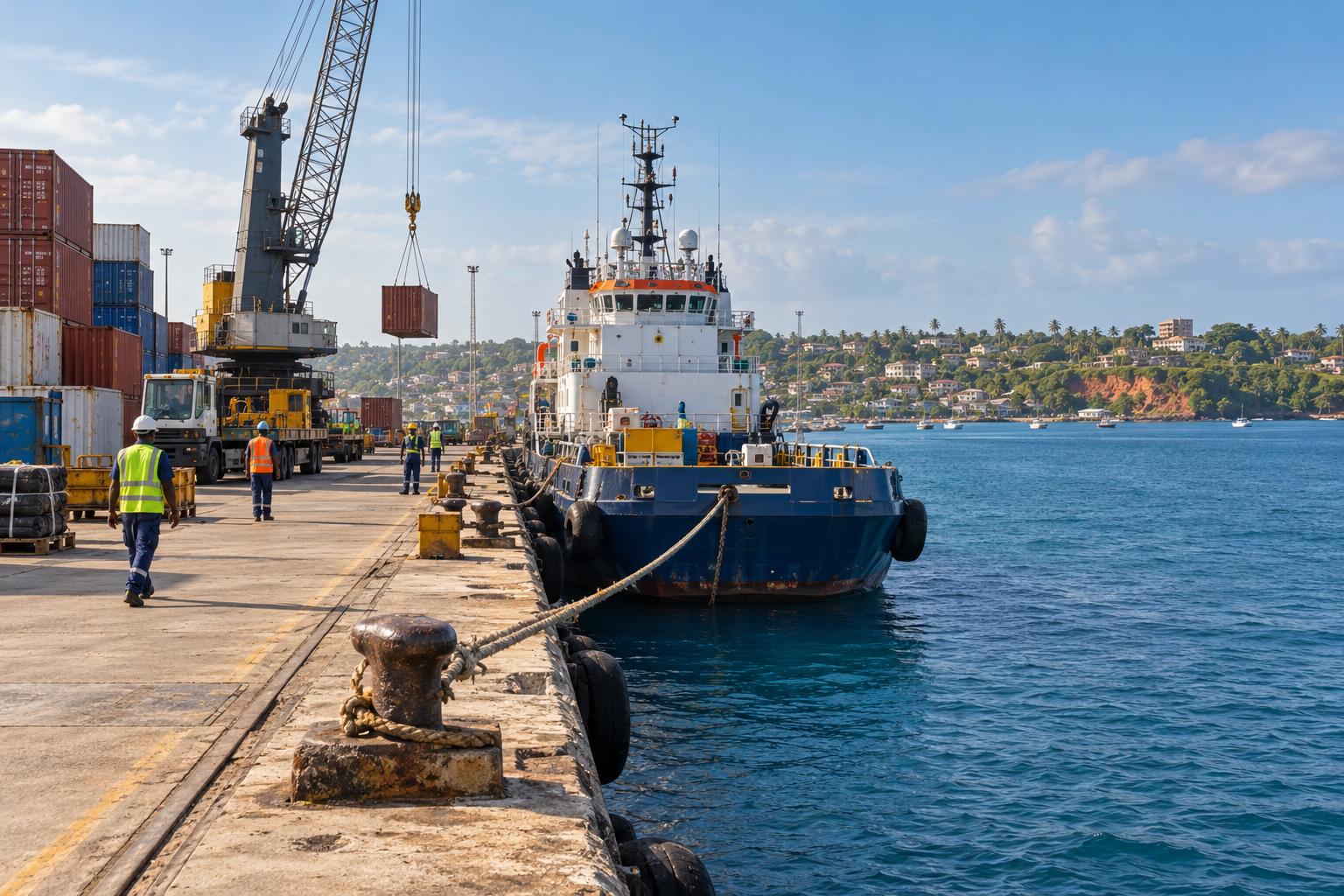
Image: pxef.com
The biggest recent change is graphite. Since September 2024 graphite from the Balama mine, in the province's interior, has been exported through Pemba instead of trucked south to Nacala in Nampula province. Balama is one of the largest graphite mines outside China, and graphite is a key battery material, so the port now sits on a small but strategically interesting supply chain that Western governments care about.
By the standards of Maputo or Nacala, Pemba's port is modest. For the gas projects that's both the problem and the opportunity.
The logistics base
Next to the town, a separate industrial port is being built for the gas industry: the Pemba Port and Industrial Logistics Base, developed for its owner, Pemba Bulk Terminal, by the Italian contractor Renco. The plan covers about 98 hectares of onshore logistics yards, a 300-metre quay with a heavy-load steel pontoon, an industrial district and an 8-kilometre private road to the national highway, at a planned investment of about 200 million euros. The first phase is complete; a second phase, with a second quay, would take about three years.
The base exists to serve the offshore and onshore gas projects: pipe, modules, drilling supplies, fuel and crews for the fields in Areas 1 and 4 (the gas projects). Its value rose sharply once TotalEnergies restarted Mozambique LNG in January 2026 (the restart).
Why Pemba and not the road
The gas site at Afungi, on the Tanzanian border, is about 400 kilometres from Pemba by road. That road, the N380 and its branches through Macomia and Mocímboa da Praia, runs through the districts where the insurgency has been fiercest (the insurgency explained). Convoys have been ambushed and roadside bombs planted on it. Heavy cargo for Afungi goes by sea to the project's own marine offloading facility. People mostly fly, through Pemba airport and the Afungi airstrip.
That makes Pemba the gas industry's back office. In February 2026 TotalEnergies asked for expressions of interest from companies able to supply port services in Pemba for its offshore drilling campaign, 18 deepwater wells in the Golfinho-Atum fields: quayside space, offices and laydown yards, stevedoring, and marine services such as bunkering, pilotage and towing. Bidders had to be registered on its supplier portal and hold Mozambican company documents (how local firms get in).
The bottlenecks
The port is small for what may be asked of it. Aid agencies supplying hundreds of thousands of people in need across the province use the same quays, warehouses and trucks as the gas contractors, and a construction ramp-up competes with them for all three. The main overland link south, the road to Nampula and the deepwater port at Nacala, is long, and in the rainy season slow.
If ExxonMobil approves Rovuma LNG, the demand on Pemba Bay would roughly double. Whether the port can absorb it is one of the quieter, more important questions about the boom.