Mozambique LNG Restarts After Five Years, and Pemba Becomes a Supply Town Again
On 29 January 2026 TotalEnergies' chief executive, Patrick Pouyanné, stood with Mozambique's president, Daniel Chapo, at the Afungi construction site in the far north of Cabo Delgado and announced that Mozambique LNG was fully back in business. The 20-billion-dollar project had been frozen since 2021, when insurgents overran the nearby town of Palma. Now about 4,000 workers were back on site, more than 3,000 of them Mozambican, and the target for the first cargo was 2029.
For Pemba, the provincial capital about 400 kilometres south by road, the restart matters almost as much as it does for Afungi. Pemba has the province's main port, its main airport, its hotels, banks and warehouses. Every gas project in Cabo Delgado runs its people, supplies and paperwork through the city.
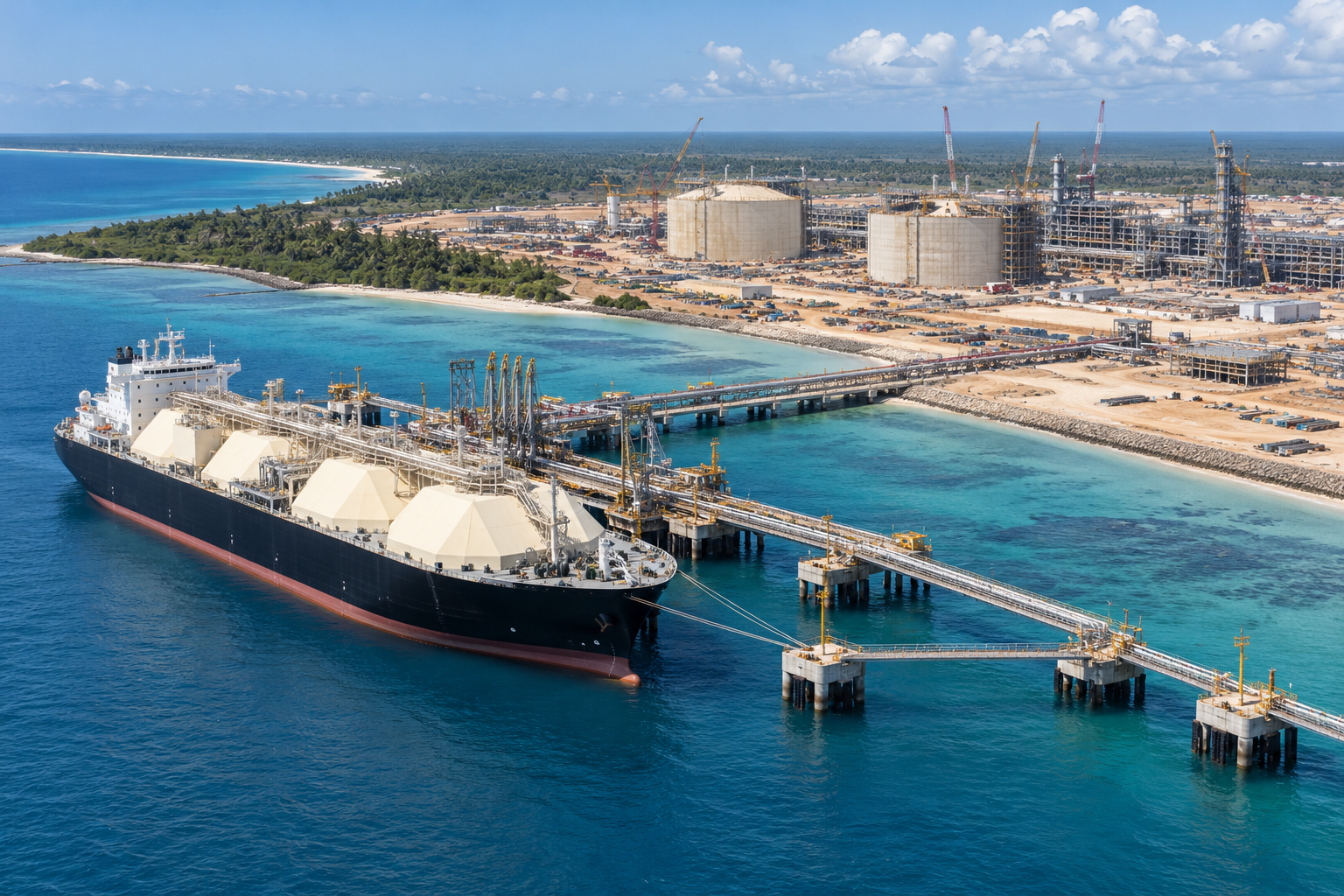
Image: pxef.com
What was frozen, and why
Mozambique LNG is the country's first onshore liquefaction plant, designed for about 13 million tonnes a year from the Golfinho and Atum fields in offshore Area 1. TotalEnergies operates it with 26.5 percent, alongside Mitsui (20 percent), the state company ENH (15 percent), three Indian state companies (10 percent each) and Thailand's PTTEP (8.5 percent). The final investment decision came in 2019, with project finance from US, UK, Japanese and other export credit agencies.
In March 2021 fighters from the Islamic State affiliate in Mozambique took Palma, next door to the site, in an attack that lasted days and killed many civilians and contractors (the insurgency explained). TotalEnergies withdrew its staff and declared force majeure. Rwandan troops arrived that July and pushed the insurgents out of Palma and Mocímboa da Praia, but the company waited more than four years before deciding, on 7 November 2025, to lift force majeure.
The delay was expensive. In a letter of 24 October 2025, Pouyanné told Chapo that the project's costs had risen by 4.5 billion dollars during the halt, and asked the government to approve a revised budget and a ten-year extension of the production period for the Golfinho-Atum fields to make up for the lost time. The project was about 40 percent built when work stopped; most engineering and procurement continued quietly in the meantime.
What the restart means in Pemba
The money is starting to move south. On 10 March 2026 TotalEnergies held a business workshop in Pemba to show local suppliers the contracts coming up in the next three to nine months, after a similar one in Palma. Its drilling campaign for the offshore fields, 18 wells in deep water about 40 kilometres off the coast, needs a supply base, and in February 2026 the company asked for expressions of interest from port service providers in Pemba: quay space and laydown areas, stevedoring, bunkering, pilotage and towing (the port and logistics base).
The company says contracts awarded to Mozambican companies will pass 4 billion dollars and that the project will provide up to 7,000 direct construction jobs for Mozambicans. A new local content law, signed in June 2026, now sets minimum shares of local procurement in categories from catering to construction (how local firms get in).
In the city, that shows up as fuller hotels on crew-change days and a scramble among Pemba businesses to get registered on the operators' supplier portals.
The risks that haven't gone away
The restart doesn't mean the war is over. Insurgent attacks continued through 2026, mostly in districts south and west of the gas site, and more than 26,000 people were displaced in the first half of the year. The project depends on Rwandan troops whose funding was in doubt in the spring, until Rwanda said in May that Mozambique would pay for them. Mozambique's government is also still recovering from the deadly protests that followed the disputed October 2024 election, and its finances are stretched.
The project's critics, including environmental and human-rights groups, point to the people displaced from the Afungi peninsula to make room for the plant, and to the emissions of a new gas export project. Its backers point to the jobs, the revenue Mozambique badly needs, and Europe's search for gas that doesn't pass through Russia or the Strait of Hormuz (more on hormuz.net).
What Pemba gets out of it depends on whether the contracts reach local firms and whether the army can keep the roads north open. Both are open questions in late 2026.