Mozambique Local Content Law, How Pemba Businesses Can Win Work on the Gas Projects
On 10 March 2026, about a month after TotalEnergies restarted its gas project, a hall in Pemba filled with local business owners. The company had come to tell them what it would be buying over the next three to nine months and how to bid for it. Cabo Delgado's governor, Valige Tauabo, said the meeting answered one of the business community's main complaints: nobody told them what was coming. Three months later, Mozambique gave those businesses a legal claim to part of the work.
The law
Law 9/2026 of 3 June, the Local Content Law, applies to oil and gas operations: the concession holders, the companies working for them, and the special-purpose companies they set up. Contractors have to pass the rules down to their own subcontractors, and the big companies are jointly liable when a subcontractor breaks them. It took effect on publication, and the government had 90 days to set up the new Local Content Authority and issue the detailed regulations.
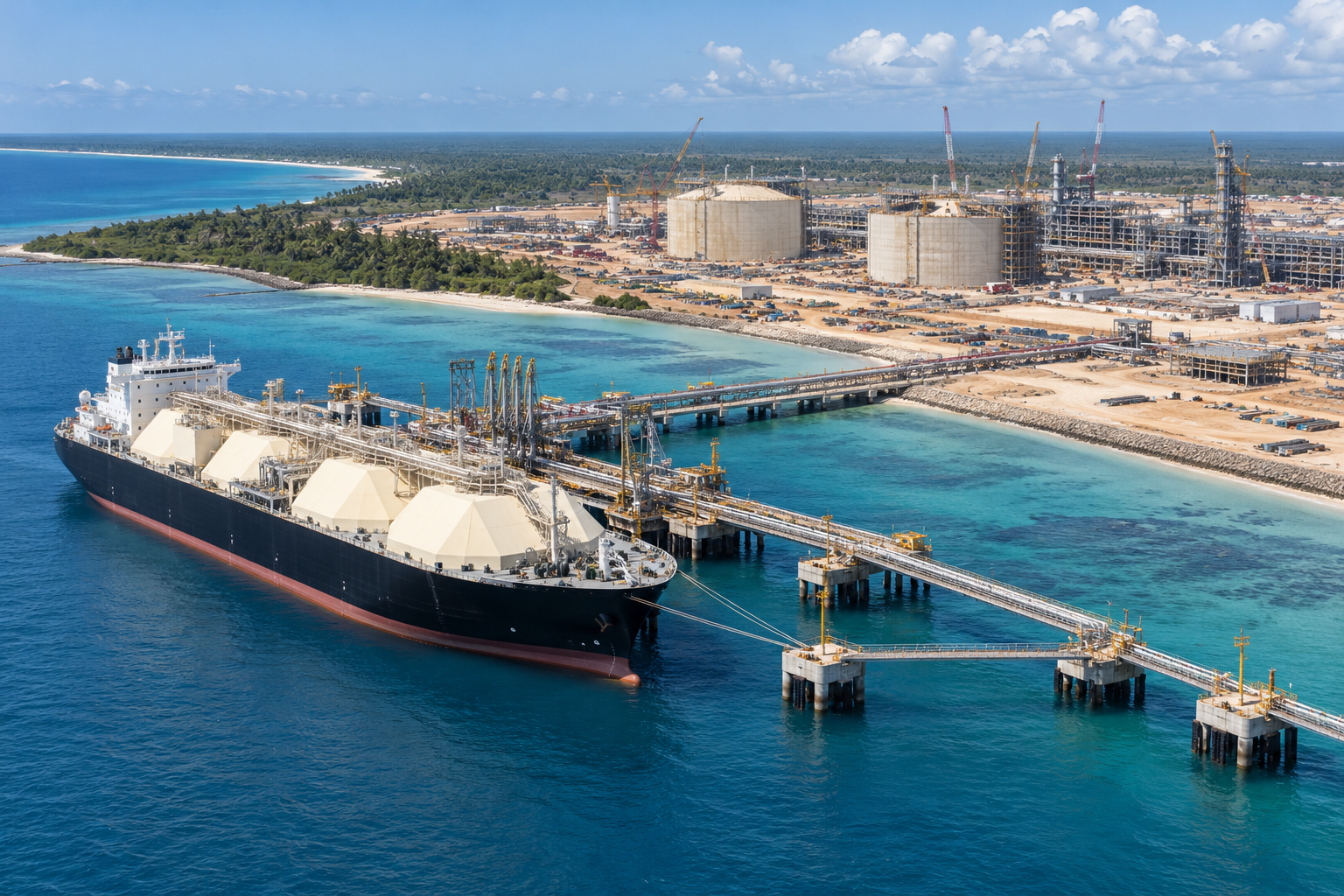
Image: pxef.com
The law works through three regimes:
- Exclusivity. A list of goods and services, set and updated by the Council of Ministers, is reserved for Mozambican suppliers that meet three tests: at least 80 percent of production inputs from Mozambique, at least 20 percent Mozambican capital, and at least half the wage bill paid to Mozambicans.
- Preference. Majority-Mozambican companies win a contract if their price is no more than 20 percent above a qualified foreign bidder's.
- Free market. Everything else is open.
It also sets minimum local shares by category: 85 percent for petroleum, fishery and timber products, 80 percent for catering and cleaning, 70 percent for legal services, 60 percent for accounting, 50 percent for construction, dredging, coastal shipping and aggregates, 30 percent for drilling, banking and insurance, and smaller shares for specialist trades such as welding. Partnerships between Mozambican and foreign companies must have at least 20 percent Mozambican capital.
Two clauses matter most in Cabo Delgado. Fifteen percent of semi-skilled jobs are reserved for residents of the districts affected by a project, and 30 percent of the goods under the exclusivity regime must come from the project's own province. That puts Pemba's businesses, not only Maputo's, in line for work. Penalties run from 50,000 to 300,000 dollars, and repeat offenders can lose contracts or be barred from tenders.
How to get on the list
The practical route starts with registration. TotalEnergies' Mozambique LNG and ExxonMobil's Rovuma LNG both run supplier portals; Mozambique LNG's sits on its website under local content. The operators issue expressions of interest for specific packages (in February 2026, for example, port services in Pemba for the offshore drilling campaign, described here) and invite pre-qualified firms to tender.
The paperwork is standard but strict: articles of association as published in the official gazette, a current commercial registration certificate, an operating licence, tax registration forms, a company profile and a record of similar work. The new law adds certification: an accredited body certifies a company's local content, and certified firms go on a public register kept by the Local Content Authority.
TotalEnergies says contracts to Mozambican companies on Mozambique LNG will pass 4 billion dollars, and its foundation for Cabo Delgado, endowed with 200 million dollars in 2023, says it has supported more than 8,000 jobs and 7,000 farmers and fishermen (the restart).
The catch
Local content rules are only as good as their enforcement, and Mozambique's record is mixed. The definitions can be gamed: a firm with 20 percent Mozambican capital and a foreign partner doing the real work can qualify for reserved categories. Small Pemba businesses struggle with certification, safety standards, insurance and working capital. And the war (the insurgency explained) adds security costs that a Maputo or Johannesburg competitor can spread across a bigger business.
The law also arrived late. Mozambique LNG's main engineering and equipment contracts were signed years ago. The real test will be Rovuma LNG, if ExxonMobil takes its investment decision (the gas projects), and the long years of operations, maintenance and services that follow.
For a Pemba company, the advice is simple: register now, get certified, find a partner who can carry the paperwork, and pick one category to be excellent at.