Mocímboa da Praia in 2026, the Town Where the War Began Is Back but Still Under Siege
Mocímboa da Praia is where Cabo Delgado's war started, on 5 October 2017, with a pre-dawn attack on the town's police stations (the insurgency explained). It is also the place that best shows where the war stands now. The town is back in government hands, tens of thousands of people have returned, and work began years ago to reopen its port. Yet in 2026 the insurgents attack the district almost every week, and their boats work the coast outside the harbour.
Fall and recapture
For three years after 2017 Mocímboa was hit again and again. In June 2020 an insurgent attack and the looting that followed left much of the town wrecked, and residents told local reporters that some of the looting had been done by Mozambique's own soldiers and police. In August 2020 the insurgents took the town outright and held it, port and all, for a year.
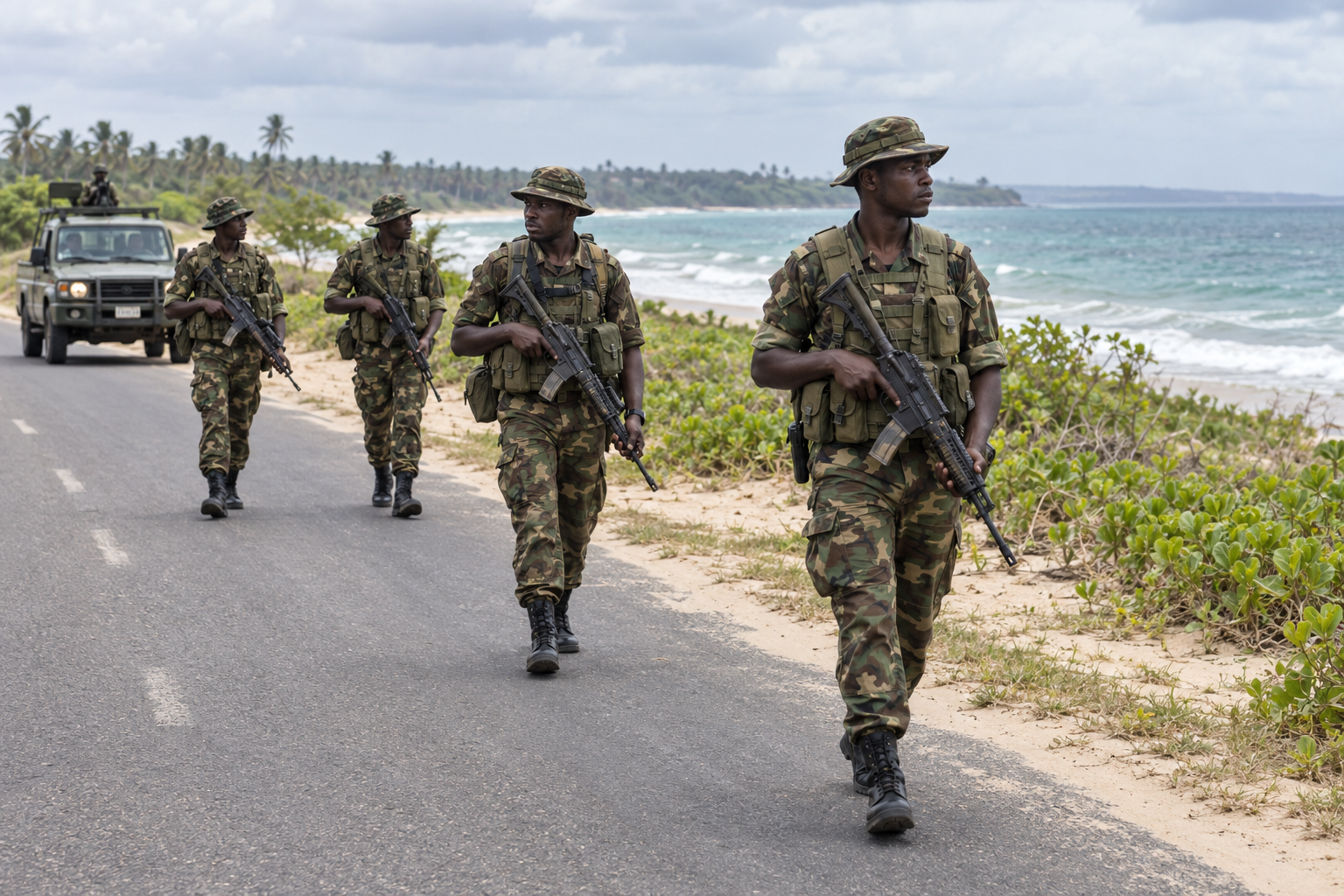
Image: pxef.com
In August 2021 Rwandan troops, with Mozambican forces, retook it, a month after arriving in the province. The town is about 70 kilometres from the gas site at Afungi, so recapturing it was the first condition for any return of the gas industry (the restart).
The return
From 2022 the government encouraged people to go home. By the end of that year about 72,000 people had returned to the district, most of them to their own villages after a short stay in the town; aid groups warned that families in transit camps lacked shelter, food and sanitation. The state ports and railways company, CFM, began repairing the port, which matters for supplies to the north of the province and for the gas projects. Officials, President Filipe Nyusi among them, made a point of visiting.
Rwanda has been the guarantor throughout. Its troops have led security in the town and along the Palma to Mocímboa corridor, which is why the dispute over who pays for them in early 2026 alarmed people here so much. Rwanda said in May that Mozambique had found the money (who pays for Rwanda's troops).
The war in 2026
The insurgents no longer hold the town, but they have never left the district. The Soufan Center, a security research group, described them in May 2026 as attacking Mocímboa da Praia almost weekly, in a campaign more of intimidation than territorial gain. In May they targeted civilians in the south of the district and claimed killings near Mbau. In early June they set off at least three roadside bombs against Rwandan patrols, one of them between Limala and Mbau.
The sea is the new front. In May 2026 insurgents landed on Tambuzi island, about 25 kilometres offshore, and extorted money from boat operators, then came back for fuel. The mouth of the Messalo river, just south of the town, gives their boats an easy hiding place. Fishermen and traders say they are squeezed from both sides: the insurgents demand payment, and so, according to the conflict monitor ACLED, does the Mozambican navy, which detained thirteen boat operators who fled the island and reportedly released them only after each paid 2,000 meticais. ACLED warned that if coastal people see the navy as predatory, some will start to see the insurgents as protection.
Why it matters beyond the town
Mocímboa is the hinge between Pemba and the gas fields. As long as the district is contested, the road north stays dangerous (is Pemba safe), supplies to Afungi go by sea and air (the port and logistics base), and the gas companies depend on Rwandan soldiers whose presence rests on a funding deal nobody has published.
The town survived the war's first phase. Whether it can have a normal life depends on a security force that behaves better than the one it replaced.