Pemba Island Cloves, How the Signature Export of Zanzibar Collapsed and Why Pemba Farmers Pay the Price
In the year to September 2025, Zanzibar earned 6.3 million dollars from clove exports, according to the Bank of Tanzania. The year before it had earned 26.3 million. A 76 percent fall in twelve months would hurt any economy. For Pemba Island, which grows most of Zanzibar's cloves, it hit the one crop that has shaped the island's economy, politics and grievances for two centuries.
Cloves are Zanzibar's emblem; the islands still sell themselves as the Spice Islands. But the clove economy has always been Pemba's more than Unguja's. Pemba has by far the greater concentration of trees, about 3.5 million of them, and on Unguja clove growing is confined to the north. When clove prices move, it's Pemba's farmers who feel it (the island guide).
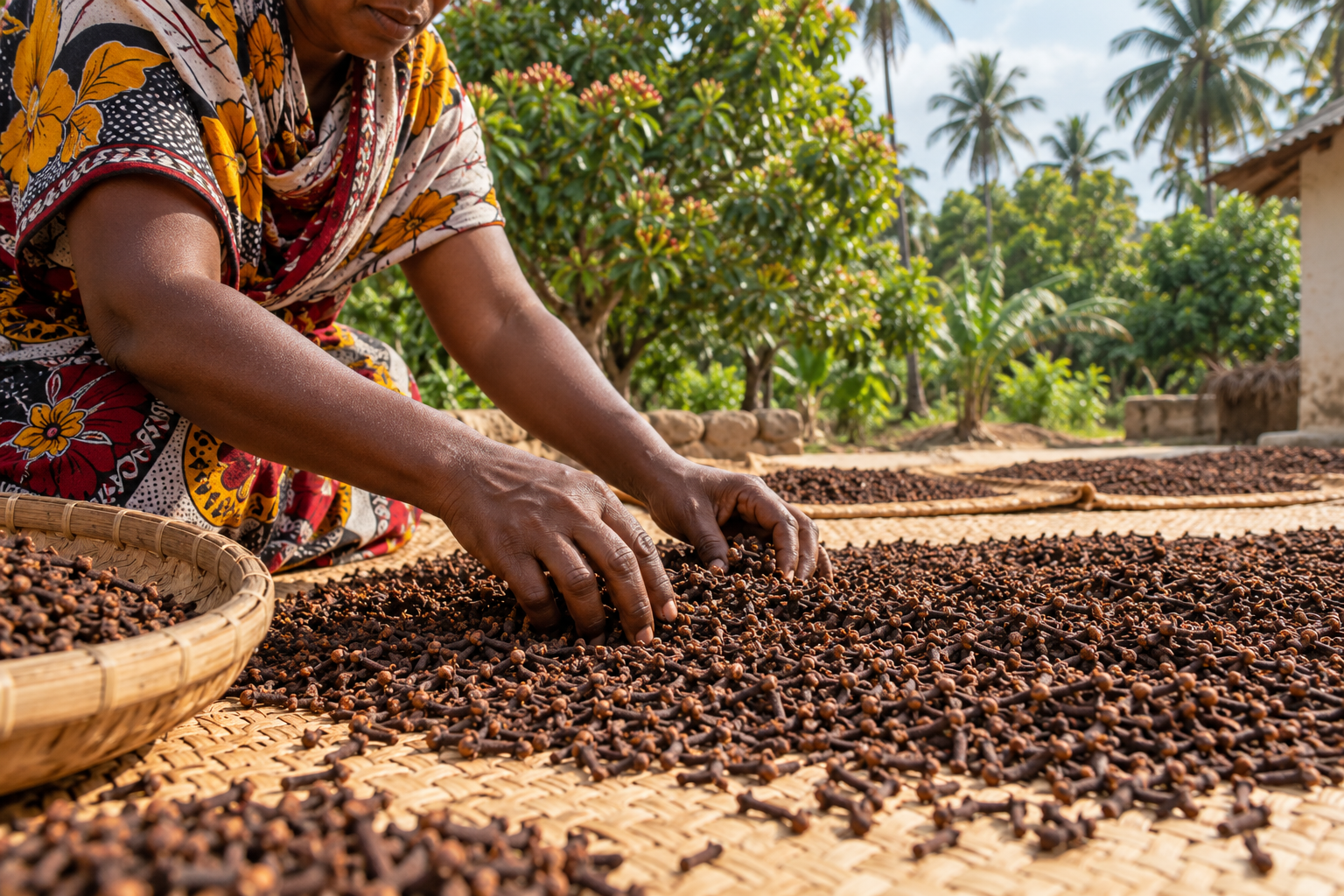
Image: pxef.com
Slavery, sultans and a state monopoly
Cloves arrived in Zanzibar under Omani rule in the early 19th century. Sultan Seyyid Said, who moved his court from Muscat to Zanzibar, encouraged plantations, and by mid-century Zanzibar and Pemba dominated world supply. The plantations were worked by enslaved Africans brought from the mainland through the Zanzibar slave market, one of the largest in East Africa, until the trade was ended under British pressure in the late 19th century. The landowning Arab elite and the enslaved and their descendants formed the fault line that exploded in the 1964 revolution.
After the revolution the new government nationalised the clove trade. For decades the state company, now the Zanzibar State Trading Corporation (ZSTC), was the only legal buyer and exporter. Under the Clove Market Law, in force from 1981 to 2010, farmers had to sell to it at prices it set, usually far below world prices. The gap went to the government. Pembans have long argued that their island grew the crop and Unguja spent the money.
Pemba's farmers responded the way farmers do. Many neglected their trees, and many smuggled their cloves across the channel to Kenya, where traders paid more. Smuggling was illegal and dangerous; it was also, for years, a rational protest against a system that treated Pemba as a revenue source. It fed straight into the island's opposition politics (Pemba's opposition).
Reform, and then the crash
From 2011 a Clove Development Strategy tried to win farmers back. ZSTC kept its central role but raised producer prices sharply, from 3,500 to 14,000 Tanzanian shillings a kilo, opened modern buying centres, gave out free seedlings and interest-free loans, and repaired roads in the clove areas. Higher prices brought many farmers back to the official market. Cloves were again bringing in a large share of Zanzibar's foreign exchange, by one estimate around 60 percent.
The 2025 collapse came from outside. Global prices fell on oversupply from the big producers such as Madagascar and Indonesia, and changing rainfall disrupted flowering and harvests on the islands. Farmers on Pemba also complain of losing land, and their trees with it, to other uses. A system built on a single state buyer and a single crop has little room to absorb a shock like that.
What Pemba could do with its cloves
The obvious answer is value. Zanzibar exports most of its cloves raw, at commodity prices. Clove oil, ground spice, certified organic and single-origin "Pemba cloves" sold under the island's own name, and spice tourism that brings visitors to the farms during the harvest in the second half of the year, all pay better. Each needs investment, reliable power and roads, and a government in Zanzibar Town willing to let Pemba keep more of what it earns.
That last condition is the hardest, and it is political. The clove trade has always been where Pemba's economics and Pemba's politics meet.